How Quiet Moth Artz Built the Hook Lab
The Hook Lab was built around one small moment: you have a topic, but the first four lines are not there yet. The tool gives that thought a quick shape without pretending to replace a custom writing process.
The build started with one stuck moment
The Hook Lab did not begin as a plan for a large songwriting platform. It began with a smaller observation: sometimes a person has a topic but cannot get the first few lines moving. A blank page gives that hesitation too much room. Quiet Moth Artz built a compact place where the user can enter the subject and get something short enough to react to.
That narrow starting point shaped the whole project. The tool needed to help with the opening move, then get out of the way. It did not need to claim that a preview was a finished song or imitate the longer exchange behind custom writing.
The public flow is the product
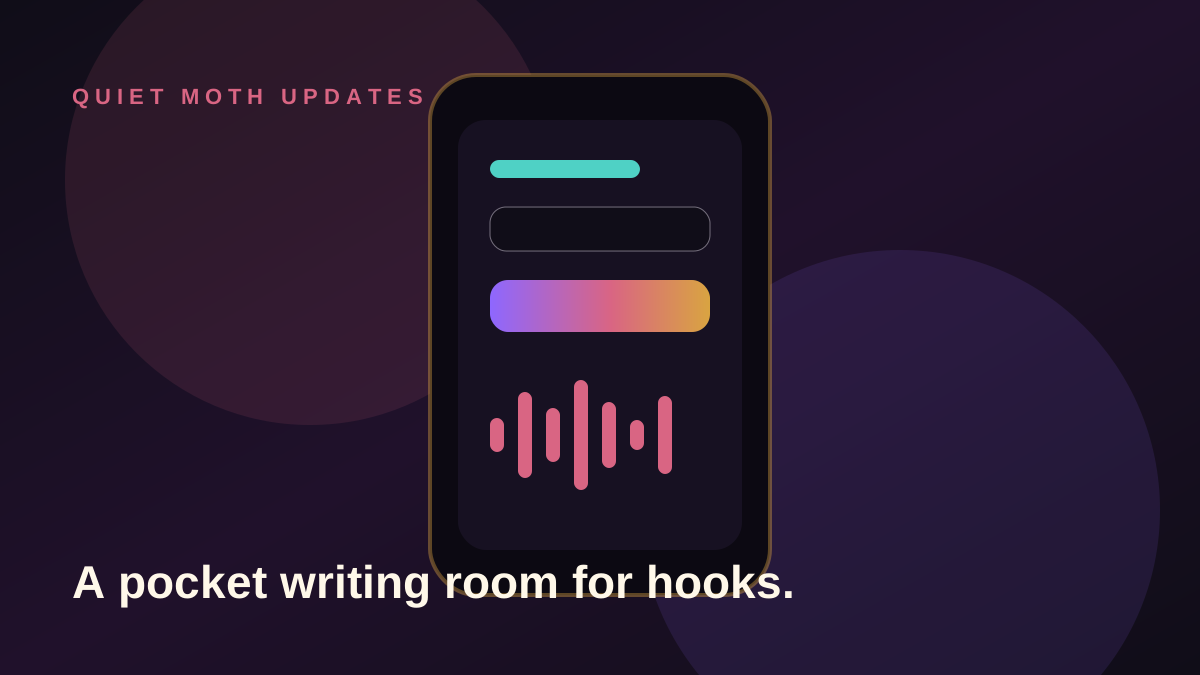
The verified interaction is easy to describe because there is very little to memorize. Enter a topic in the topic input. Press Generate Hook. Read a four-line output. The same topic produces the same lines, and the TAKE counter advances after a generation finishes. Change the topic when you want to test a different direction, and use Copy Hook to place the result on your clipboard so you can paste it into your notes.
That is the writing flow. There are no public genre dials, rhyme sliders, mood menus, secret quality scores, or controls for choosing an AI model. Adding those details to the story would make the tool sound more elaborate, but it would no longer describe the tool people can actually use. The build was stronger once the explanation matched the screen.
Four lines create a useful limit
A short output gives the user enough language to hear repetition, cadence, or a possible turn of phrase. It is also brief enough to discard without feeling invested. Because each result stays small, you can react quickly, copy a phrase with potential, and continue working somewhere suited to longer notes.
The limit also keeps the free tool honest. Four lines can start a thought. They cannot learn the full story behind a release, decide which details belong to a brand, or work through several rounds of lyrical direction. The output is a preview with a clear edge around it.
Separation made the experience cleaner
Hook Lab has its own route rather than being squeezed into a marketing page. That separation gives the topic field, action, and result room to breathe. It also makes the tool easy to share directly. Someone who scans the site’s QR code can land in the writing experience without navigating through the rest of the portfolio first.
The tool has an installable app setup and a service worker for its app shell. The service worker is scoped to the Hook Lab path, which keeps that behavior separate from the main site. This is an important boundary in the build story: the public facts support an installable, focused experience. They do not support promises that every generation works offline or that the service worker performs work the interface never demonstrates.
Mobile removed excuses for extra controls
On a phone, every control asks for space and attention. The useful sequence needed to remain visible: topic, Generate Hook, four lines, TAKE counter, Copy Hook. A larger settings panel would have pushed the result down the page and made the user configure a writing session before writing anything.
The mobile constraint was helpful. It forced the project to choose what belonged. The TAKE counter stayed because it helps distinguish completed attempts. Copy Hook stayed because the output needs a next destination. Controls that could not justify their place were omitted instead of hidden behind icons. Simplicity here came from subtraction, not from pretending the underlying creative problem was simple.
The free tool and custom work do different jobs
Hook Lab offers a free preview in four lines. Custom Songwriting & Hooks starts with the specific message, mood, audience, and context of a real project. That work may involve a hook, slogan, chant, verse, or a broader song direction, depending on the request. It also leaves room for conversation and revision.
Keeping those paths distinct protects both. The free tool can stay immediate because it does not ask for a full brief. Custom work can stay personal because it is not reduced to pressing Generate until something fits. If you want to develop the craft behind a rough starting point, the related article How to Write a Catchy Song Hook From a Rough Idea covers the writing choices in more depth. The SquadUp Records case study shows the wider presentation context around a music-focused project.
What the build taught us
First, a small promise is easier to test. “Topic in, four-line preview out” lets a visitor know immediately whether the tool worked for the moment they brought to it. Second, interface labels should describe actions plainly. Generate Hook, Copy Hook, and TAKE do not need a tutorial. Third, technical features should support the route people take rather than become the headline. Installation, the service worker, QR access, and the custom route all help people reach or keep the tool; none of them should crowd the writing surface.
The build also reinforced the value of omission. Unsupported controls create false expectations. Invented result claims make a modest utility sound unreliable. A focused tool becomes more credible when its article names what is present and stops there.
Try one take
Open the Quiet Moth Hook Lab, enter the topic that has been sitting in your notes, and generate one four-line take. Use Copy Hook if there is a phrase worth keeping; change the topic if you want to test a different direction. If the idea needs writing shaped around your exact message and project, request custom songwriting after you have tried the preview.
Start with a preview. Continue with your exact idea.
Open the free Hook Lab for a four-line take, or request custom writing built around your message, mood, and audience.
← Return to Blog